For many customers, the shock was not only the missing money. FTX still looked untouchable from the outside: stadium deals, celebrity ads, venture backing, deep liquidity, political connections, and one of the biggest brands in crypto.
Later on, the withdrawals stopped.
What followed was not a single crash. The collapse turned into years of lawsuits, bankruptcy claims, frozen balances, recovery portals, court filings, repayment debates, and investigations reaching far beyond Sam Bankman-Fried himself.
By 2026, the story had moved into another layer of the FTX network: the firms surrounding the exchange.
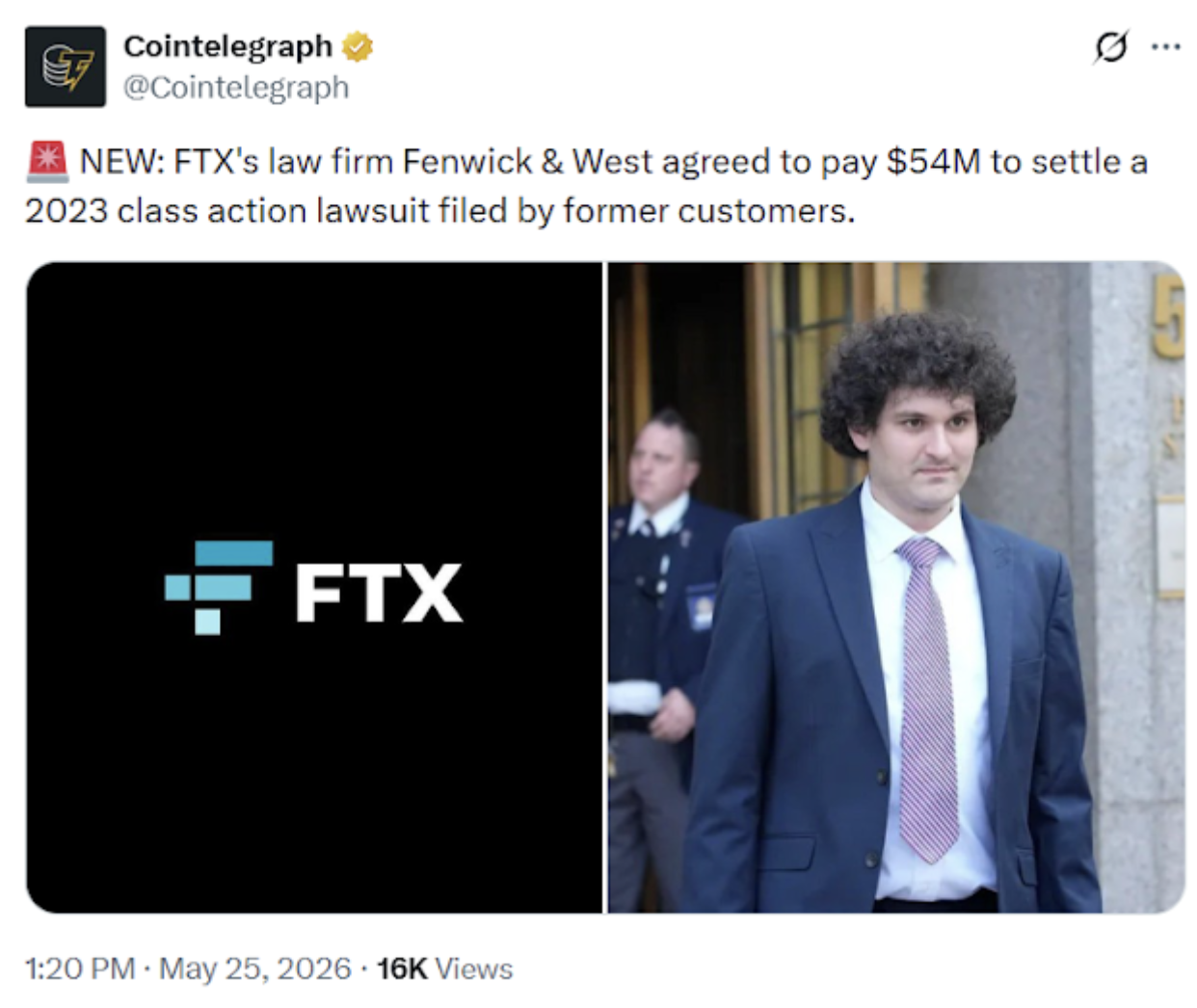
The latest name is Fenwick & West. Reuters reported that the law firm agreed to pay $54 million to settle claims from former FTX customers who accused it of helping support legal and corporate structures tied to the exchange’s fraud claims. Fenwick denied wrongdoing, and the settlement still needs court approval.
FTX Timeline From Collapse To Fenwick Settlement
May 2019: Sam Bankman-Fried and Gary Wang launch FTX as a crypto derivatives exchange.
November 2022: FTX freezes withdrawals and files for bankruptcy after a liquidity crisis hits the exchange.
Late 2022: Questions spread around Alameda Research, internal transfers, and customer fund usage.
2023: Bankruptcy lawyers and prosecutors continue tracing assets, entities, and structures tied to FTX.
2024: Sam Bankman-Fried receives a 25-year prison sentence after fraud convictions.
May 2026: Fenwick & West agrees to a $54 million settlement with former FTX customers.
For a wider visual recap of how the collapse unfolded, the investigation below gives useful background on how the public narrative around FTX changed after withdrawals froze.
Why Fenwick Became Part Of The Story
Fenwick & West did not operate FTX. The firm advised the exchange before the collapse.
Before the collapse, FTX looked like a serious crypto client: major investors, celebrity ads, sports sponsorships, and constant media coverage. For outside advisers, the brand carried market status and public trust.
According to Reuters, former customers claimed Fenwick helped “craft and implement strategies” that allegedly supported the fraud structure behind the platform.
The lawsuit focused on more than contracts or legal paperwork. Plaintiffs pointed to the wider setup around FTX and Alameda Research: corporate entities, banking access, internal controls, and structures that allegedly helped customer funds move behind the scenes.
Reuters reported previously that plaintiffs accused Fenwick of helping create structures that allegedly allowed FTX to operate around regulatory scrutiny.
Fenwick rejected the allegations and said it had no knowledge of fraud inside FTX. The firm said it stands by the integrity of its legal work.
Bloomberg Law noted that other settlements tied to the same litigation wave involved auditor Prager Metis and former NBA player Udonis Haslem.
The settlement matters because the FTX case keeps expanding outward. First came the exchange itself. Then Alameda Research. After that, executives, promoters, auditors, and outside firms connected to the platform.
Why Former Customers Still Sound Angry
Repayments did move forward. FTX Recovery Trust updates show distribution rounds continuing through claim portals, payout providers, and bankruptcy procedures.
The anger never really disappeared.
Many former users spent years dealing with frozen balances, claim transfers, repayment queues, identity checks, tax questions, and uncertain timelines.
The tone in public comments across X, Reddit, and YouTube still sounds bitter. Many former customers do not describe the process as a clean refund. They describe it as years of waiting after losing access during one of the worst moments in the market.
In reality, price recovery made the frustration worse for some creditors.
Associated Press noted in 2024 that Bitcoin traded around $16,000 during the collapse period and later recovered sharply. For many users, receiving cash years later did not feel the same as getting their crypto back.
FTX also damaged trust far beyond one exchange.
Users started questioning reserves, liabilities, internal lending, affiliated firms, and customer fund segregation behind centralized platforms.
The Recovery Process Did Not End The Fallout
In March 2026, FTX Recovery Trust announced another $2.2 billion distribution to creditors.
It all sounds like closure on paper. The real picture stayed messy.
Recovery meant forms, deadlines, accepted claims, payout schedules, provider verification, and years of legal uncertainty after withdrawals froze.
The court system can process claims. It cannot give users back the exact market positions, timing, or opportunities they lost in 2022.
Its part still drives the emotional reaction around FTX.
What The Collapse Changed For Crypto Users
FTX changed how users think about centralized exchanges.
Before 2022, many traders treated large platforms almost like digital banks. FTX showed how quickly trust can disappear once withdrawals stop and internal structures start leaking into public view.
CoinDesk called FTX a warning shot for centralized finance and a fresh argument for DeFi.
FTX made many users rethink CEX custody. After the collapse, “not your keys, not your coins” sounded less like crypto slang and more like a real risk rule. Interest in DeFi and DEXs grew because users wanted wallet control, on-chain settlement, and fewer black boxes between deposits and withdrawals.
The useful takeaway is specific. Most former customers now talk about the same practical issues:
keeping withdrawal records and TXIDs;
understanding which legal entity controls the platform;
checking whether proof-of-reserves includes liabilities;
avoiding oversized balances on one exchange;
paying attention to affiliated trading firms and lending exposure.
AML and KYC checks still matter. They do not automatically prove that customer assets are safely managed behind the platform itself.
Verdict: The Fenwick settlement keeps the FTX collapse alive as more than old crypto drama. What started as frozen withdrawals in 2022 turned into years of lawsuits, repayments, investigations, and public anger around how much risk could stay hidden behind one of crypto’s most trusted brands.
TRON’s high-throughput blockchain and TRC-20 stablecoins, combined with ChangeNOW’s fiat gateway, power instant global transfers, low-cost payments, and scalable digital finance.
Understand what crypto slippage is, why it happens during swaps and trades, and how to avoid losses with ChangeNOW. Learn practical tips to minimize price deviation and protect your assets during volatile market conditions.