This guide breaks down the real data behind the network: usage metrics, historical price behavior, tokenomics, and what both bulls and bears are actually arguing.
Our goal is to give you the full picture, so you can decide whether Solana fits your portfolio, your risk tolerance, and your time horizon.
Disclaimer: Here you'll find facts, verified data, and general market analysis to help you form your own view on Solana as an asset. This content is for informational purposes only and does not constitute investment advice or a recommendation to invest in any crypto asset. No price predictions. Whether any crypto asset is a “good investment” depends on your individual circumstances and risk tolerance.
Want to sneak a peek into Solana's future through a crystal ball of market data and analyst forecasts?
Solana is a L1 blockchain, meaning it's a standalone network, not built on top of Ethereum or any other chain.
It was designed from the ground up for speed and scale, targeting the kind of throughput that makes real-world applications actually usable: fast trades, cheap transactions, games that don't lag, payments that settle instantly.
SOL is the network's native token. You need it to pay transaction fees, stake to help secure the network, and participate in governance votes. As network activity grows, so does the demand for SOL, which is the core of the investment thesis.
FAQ
A combination of network usage, macro conditions, and market sentiment. The most reliable long-term signal is on-chain activity - transaction volume, DEX usage, and fee revenue. When real users are paying to use the network, demand for SOL is organic.
When price moves without corresponding usage growth, it's mostly speculation.
If you're staking, inflation is largely offset by the rewards you earn. If you're not staking, your share of the network dilutes passively over time.
Current inflation is on a fixed declining schedule toward a 1.5% long-term floor, so the effect diminishes year over year. Current rate is 4.18% to 5.1%.
In order of how frequently they appear in serious analysis: regulatory uncertainty around staking and asset classification, validator concentration, remaining insider unlock schedules, and competitive pressure from Ethereum L2s.
The outage risk hasn't disappeared but has decreased meaningfully with ongoing infrastructure improvements.
Different thesis, different risk profile. Ethereum is the more mature network with deeper institutional roots and a larger developer base. Solana offers higher growth potential with higher volatility.
Neither is objectively better - the right choice depends on what you're betting on and over what timeframe.
The most useful free tools: Solscan for transaction data, DefiLlama for TVL and DeFi activity, Solana Beach for validator and staking metrics, Token Unlocks for supply and vesting schedules, and Artemis for cross-chain comparisons.
No one can tell you that with certainty, and anyone who does is either selling something or dangerously overconfident.
What we can say is that Solana has strong fundamentals: a fast, low-cost network with growing developer activity and real user adoption.
Historically, it has recovered from major crashes and reached new highs. Whether that trend continues depends on broader market conditions, Ethereum competition, and how well the ecosystem keeps delivering.
You can buy SOL on ChangeNOW: with a card, bank transfer, or swapping from another crypto. No account required for basic swaps. Just select your payment method, enter your wallet address, and you're done. As always, make sure you're sending SOL to a compatible wallet before you confirm anything.
What is Solana used for?
Most people buy SOL the same way they'd buy a stock: hoping the price goes up. But what you're actually buying is closer to a toll token for the network.
Solana is a high-speed blockchain built for applications that need to move fast and stay cheap.
That means DeFi platforms, NFT marketplaces, on-chain gaming, and payment solutions - all running with transaction fees that won't make you wince. It's become a go-to network for developers who want Ethereum-level capabilities without Ethereum-level congestion.
Proof of History + Proof of Stake: How it works
Solana's speed comes from a combination of two mechanisms:
Proof of Stake (PoS) is the foundation - validators lock up SOL as collateral to earn the right to process transactions and add new blocks. This is the same model Ethereum uses post-Merge.
Proof of History (PoH) is Solana's key innovation. Think of it as a built-in cryptographic timestamp - a verifiable record that proves a transaction happened at a specific point in time, before the network even needs to confirm it.
This dramatically reduces the back-and-forth between validators, which is what allows Solana to process thousands of transactions per second while Ethereum struggles with hundreds.
The tradeoff? Running a Solana validator requires serious hardware, which has real implications for who can actually participate in the network.
Network governance: Who's in charge?
Officially, Solana is decentralized: no single entity controls it, and SOL holders can vote on protocol changes.
In practice, the picture is more complicated.
The Solana Foundation and Solana Labs, the company that originally built the network, still carry significant influence over its direction.
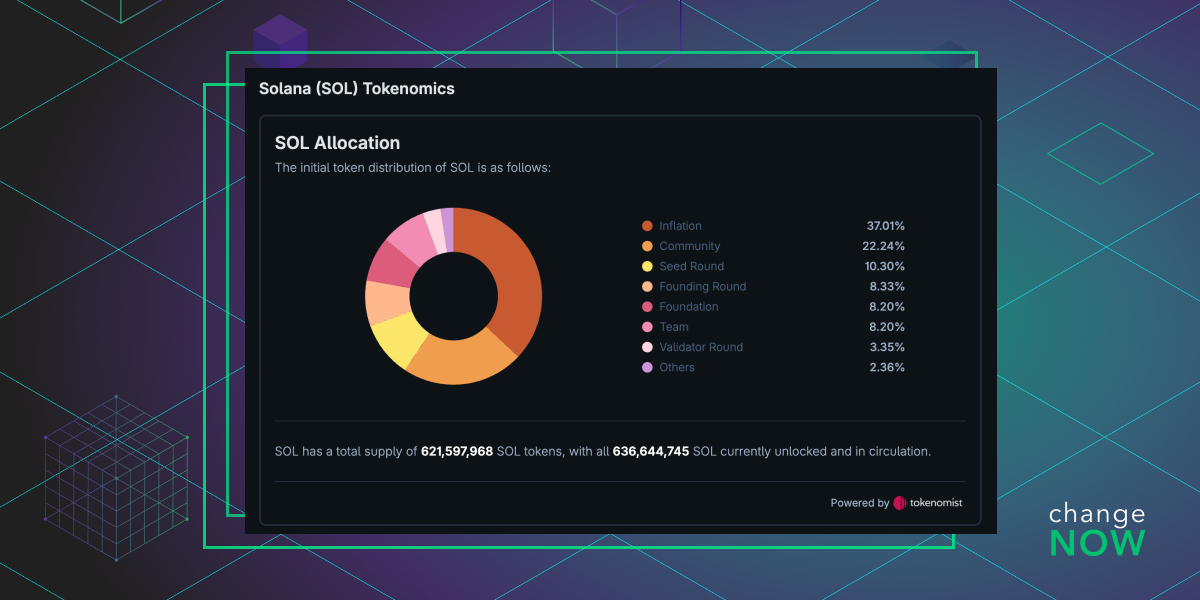
A large share of the initial SOL supply was allocated to insiders - the founding team, early investors, and the
Foundation itself. While those allocations have been vesting over time, the concentration of stake among a relatively small group of validators means that voting power isn't evenly distributed.
This isn't unique to Solana. Most L1 blockchains have similar dynamics in their early years. But it's worth understanding before you invest.
Solana in Numbers: 2026 Data Snapshot
Before we get into what analysts think and what the charts suggest,
let's look at what's actually happening on the network.
Numbers first, opinions later.
Price, Market Cap, and Supply
Solana is currently ranked among the top 10 cryptocurrencies by market cap, with a circulating supply that is close to its total supply, meaning most SOL that will ever exist is already in circulation.
The gap between the two is narrow compared to many other crypto projects, which limits long-term inflation from new supply entering the market.
One figure worth tracking over time is the percentage below all-time high. SOL has historically made full recoveries from deep drawdowns, but those recoveries have taken 12-24 months.
Where the current price sits relative to ATH is a useful orientation point, not a signal in itself.
We'll unpack that further in the tokenomics section.
On-Chain Activity and Real Usage
Price is what the market thinks SOL is worth. On-chain activity is what users are actually doing with it. These two numbers don't always agree, and when they diverge, it's worth asking why.
The metrics worth tracking regularly:
Daily transactions and active addresses — available on Solscan
Stablecoin supply on Solana — available on DefiLlama
Stablecoin supply is a particularly useful signal. When stablecoins flow into a network, it usually means users are actively trading, lending, or holding assets on it, and not just speculating on the token price itself.
Solana's stablecoin supply has grown significantly since 2023, reflecting genuine DeFi activity rather than speculative inflows alone.
Staking Metrics and Inflation Rate
Staking is how Solana's network stays secure, and one of the key factors shaping SOL's long-term supply dynamics.
Historically, Solana has maintained a staking ratio above 60%, meaning the majority of circulating SOL is locked up and not actively being sold. That acts as a natural counterweight to inflationary pressure.
Solana's inflation follows a fixed declining schedule: it started at 8% annually and decreases by 15% each year until it reaches a long-term floor of 1.5%. That trajectory is a permanent feature of the protocol, and is one of the more predictable elements of SOL's long-term supply dynamics.
Simply put: the more SOL people stake, the less is floating around on the market, and over time, the inflation creating that SOL is shrinking too. For long-term holders, that's a relevant dynamic.
Solana price history: What past cycles tell us
SOL has already lived several lives in the span of a few years: from obscure L1 to top-10 asset, to near-zero, and back again.
Understanding what drove each move matters more than memorizing the price points.
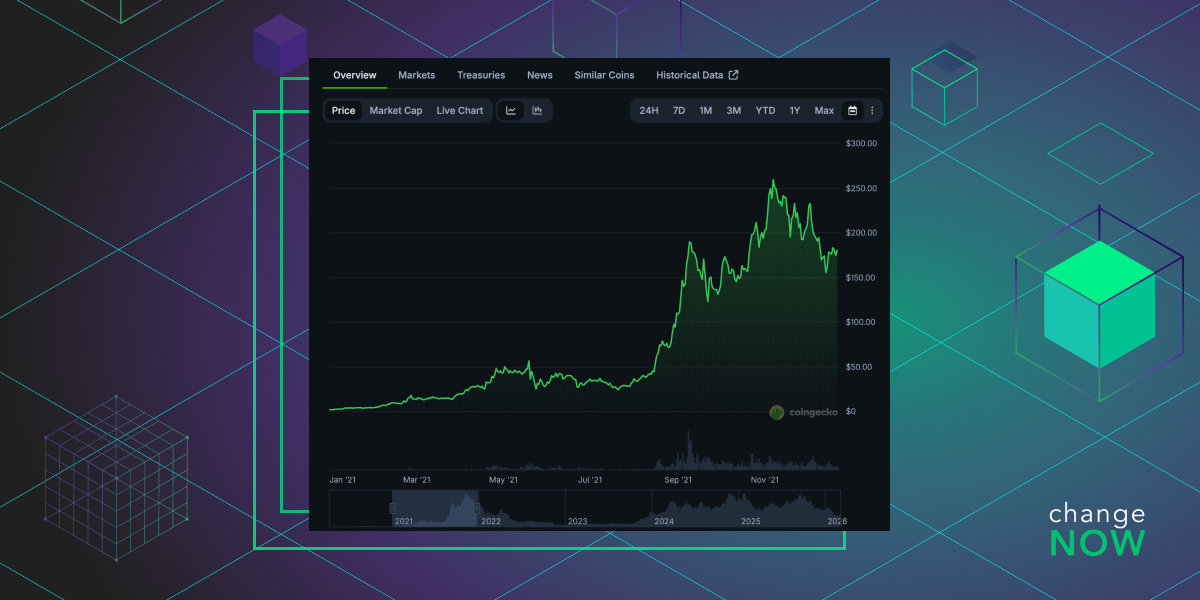
2021 bull run: What drove it
SOL entered 2021 trading under $2. By November it had hit an all-time high of $260 - a roughly 13,000% move in under a year.
What actually drove it wasn't magic. Three things converged:
Narrative: Solana was positioned as "the Ethereum killer" - faster, cheaper, and developer-friendly at a time when Ethereum gas fees were making the network nearly unusable for retail users
Ecosystem momentum: NFT collections, DeFi protocols, and gaming projects launched on Solana in rapid succession, creating genuine on-chain activity to point to
Macro conditions: 2021 was a historic liquidity wave - cheap money flowed into risk assets across the board, and crypto captured a disproportionate share of it
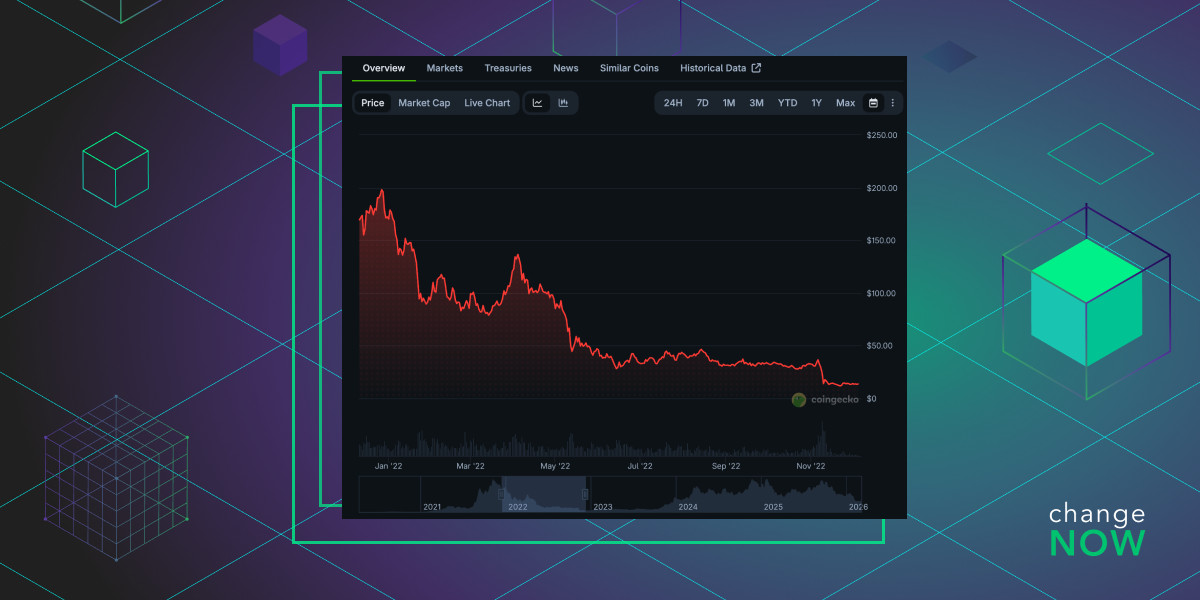
2022 crash and FTX collapse: What happened
From its $260 peak, SOL fell to roughly $8 by the end of 2022 - a 97% drawdown.
The first was the broader crypto bear market triggered by the Terra/LUNA implosion in May 2022, which wiped out confidence across the entire sector. The second, and more Solana-specific, was the collapse of FTX in November 2022.
FTX and its sister trading firm Alameda Research were among Solana's most prominent backers, holding significant SOL positions.
When FTX collapsed, forced liquidations hit SOL particularly hard. The association also damaged Solana's reputation at a critical moment, raising questions about how decentralized and independent the network actually was.
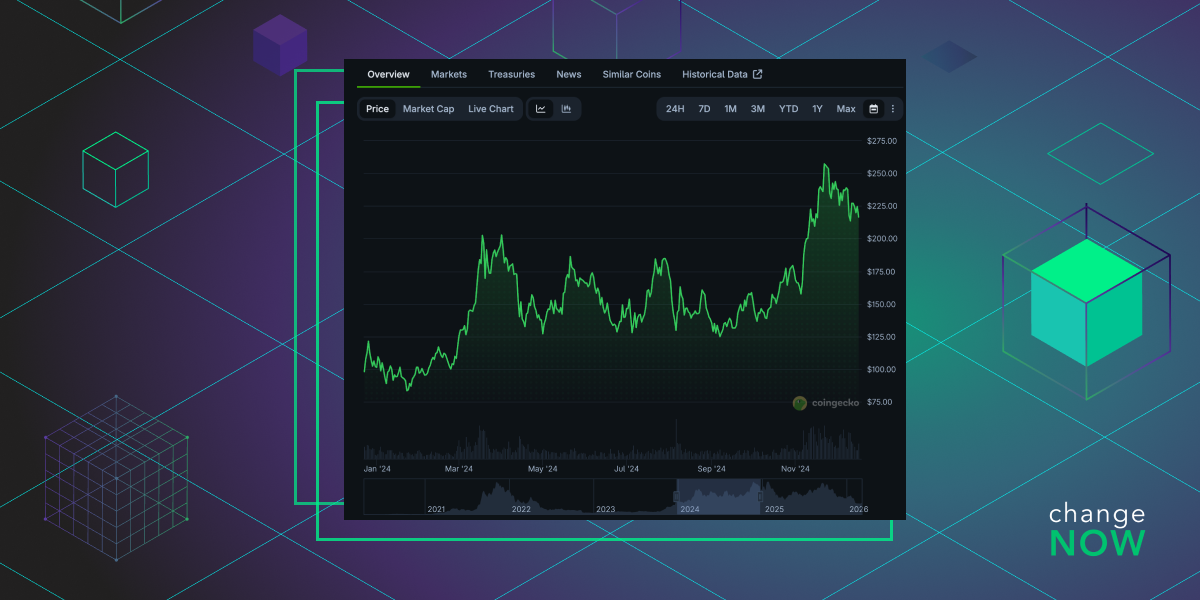
2024 recovery: What changed
SOL recovered from its lows and re-entered the top 5 by market cap during the 2024 bull cycle, at one point trading above $200 again.
What was different this time:
Genuine usage growth: Unlike 2021, the 2024 rally was accompanied by real on-chain metrics - DEX volume, stablecoin inflows, and fee revenue all grew alongside price
Memecoin supercycle: Solana became the dominant chain for memecoin launches, driving explosive short-term transaction volume - a double-edged signal we'll revisit in the bear case
Institutional interest: SOL ETF discussions entered mainstream financial media for the first time, bringing a different class of investor into the conversation
In October 2025, the first spot SOL ETFs went live. This moved Solana into the same category as Bitcoin and Ethereum in the eyes of institutional investors. Early inflows reached around $900 million, showing solid demand from traditional finance.
It didn’t push the price instantly, but it changed the narrative: Solana became part of the mainstream investment landscape.
What history tells us and what it doesn't
Three cycles in, a pattern is visible: Solana amplifies whatever the broader market is doing.
In bull markets, it outperforms. In bear markets, it falls harder than most. That's not unusual for a high-beta asset, but it does mean SOL holders have historically needed strong conviction to sit through the drawdowns without selling.
What history can't tell you is whether the next cycle follows the same script.
The FTX overhang is gone. The ecosystem is more mature. Institutional money is closer to the door. But competition is also stiffer, and the memecoin-driven volume that powered 2024 isn't a thesis - it's a tailwind that can reverse quickly.
So here's the tension: Solana has proven it can recover and reach new highs. It has also proven it can lose 97% of its value in a single cycle. Whether the 2026 setup looks more like the former or the latter depends on factors we'll break down in the next two sections.
Why investors are bullish on Solana
The bull case for SOL isn't built on hype alone - it's built on a specific thesis about what the next phase of blockchain adoption looks like and which networks are positioned to capture it.
Well, here's what optimists are actually pointing to.
The high-throughput blockchain thesis
The core argument is simple: mass adoption requires mass throughput.
For blockchain to power real consumer applications: payments, gaming, social platforms, financial infrastructure, it needs to be fast enough and cheap enough that users don't notice the underlying technology.
Solana's architecture was designed with that endpoint in mind. At sub-cent transaction fees and block times under half a second, it's one of the few L1 networks that can credibly make that claim today.
Investors who believe the next wave of crypto users will come from consumer apps, not just traders and DeFi power users, see Solana as one of the best-positioned networks to receive that demand.
DeFi, payments, and consumer apps
Solana's ecosystem has matured significantly since 2021.
What was once a handful of DeFi protocols and NFT marketplaces has expanded into a broader stack of applications across trading, payments, and consumer products.
A few developments worth noting:
Solana Pay has seen growing adoption as a payment rails alternative, particularly in markets where low fees matter at the point of sale
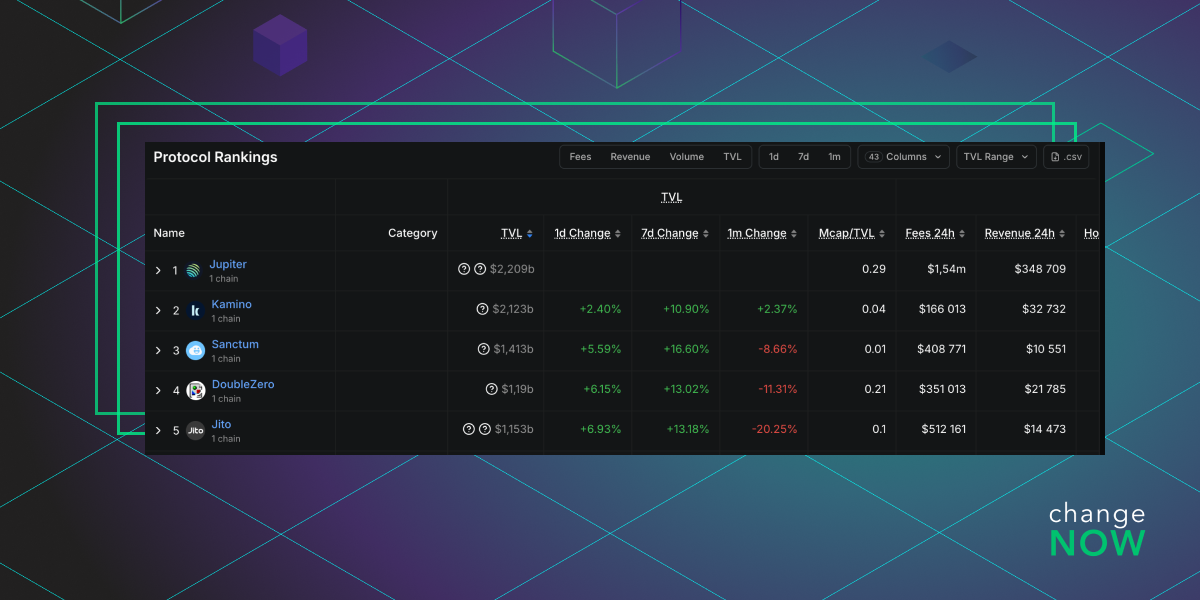
Jupiter, Solana's leading DEX aggregator, has become one of the highest-volume decentralized exchanges across all chains — not just within Solana
Liquid staking protocols like Marinade and Jito have made staking more accessible, deepening the DeFi ecosystem and increasing the utility of staked SOL
One of the more significant developments shaping 2026 is the approval of spot SOL ETFs. Following the earlier launches of Bitcoin and Ethereum ETFs, Solana has now entered the same institutional arena.
Why does this matter? ETFs don't just bring new money - they bring a different kind of money.
Institutional capital tends to be longer-term, less panic-prone, and attached to compliance frameworks that require sustained due diligence.
With spot SOL ETFs now live, this is no longer a hypothetical catalyst. It introduces a structural demand driver: capital that flows in through traditional financial channels, often with longer investment horizons and clearer allocation strategies.
That said, approval alone doesn’t guarantee sustained inflows. The real impact depends on how much capital these products attract over time and whether Solana can maintain enough momentum to justify that institutional interest.
Long-term network value is built by developers, not traders. The projects being built today are the applications that will drive user demand in two to three years, which makes developer activity one of the most forward-looking metrics available.
According to the Electric Capital Developer Report 2025, Solana ranks 4th among the top chains by monthly active developers, with growth accelerating following the 2024 cycle.
The quality of that development matters too. Solana has attracted teams building consumer-facing applications: wallets, mobile apps, payment tools, rather than purely financial infrastructure.
That's consistent with the high-throughput thesis: the developers who believe in Solana's endgame are building for the users who haven't arrived yet.
Why skeptics are cautious
Speed and ecosystem growth aren't what skeptics dispute. Their concerns are structural - the kind that don't show up in a transaction count dashboard but matter a lot when markets turn.
Outage history: Dates, causes, and fixes
Solana has experienced multiple significant network outages since its mainnet launch - a track record that's hard to ignore for a blockchain positioning itself as infrastructure for real-world applications.
The most notable incidents:
Date
Duration
Cause
September 2021
~17 hours
Transaction flood / resource exhaustion
January 2022
~48 hours
Duplicate block issue
May 2022
~7 hours
NFT bot traffic overload
February 2023
~19 hours
Bug in QUIC implementation
February 2024
~5 hours
Non-deterministic bug in BPF loader
The Solana team has addressed each outage with technical fixes, and the frequency has decreased over time. But skeptics make a pointed observation: a payment network or financial application that goes down for 17 hours isn't just inconvenient - it's a trust problem.
Reliability at scale remains an open question, not a solved one.
Validator concentration and decentralization concerns
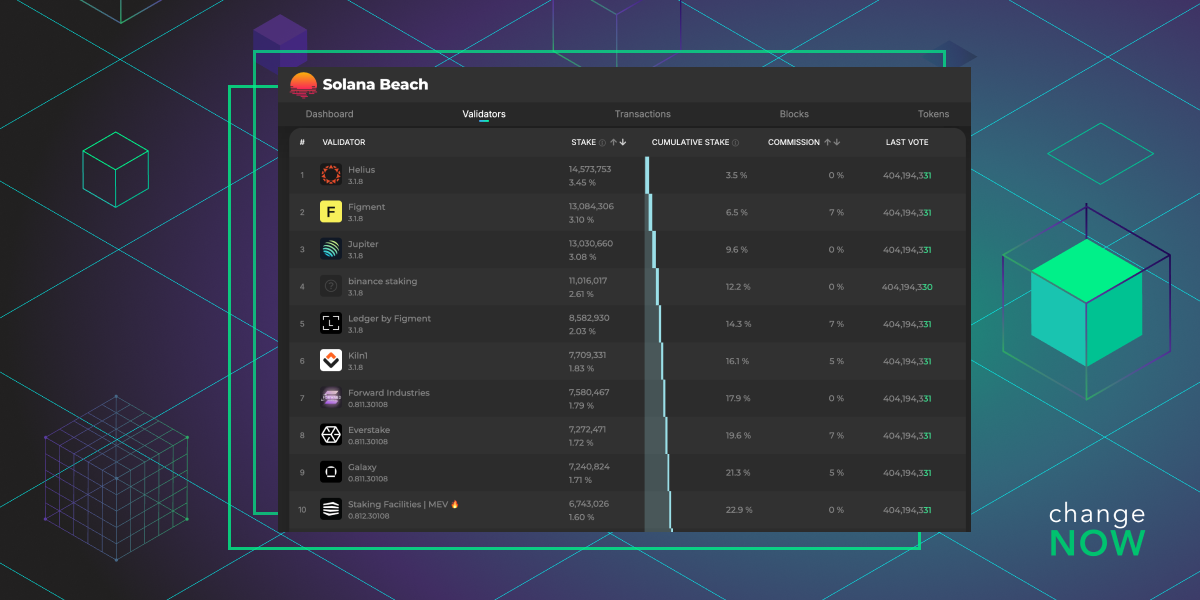
With 799 active validators, Solana's validator set is small compared to Ethereum's. But the raw number is less concerning than the distribution of stake among those validators.
A significant portion of total staked SOL is concentrated among a relatively small group of large validators, meaning a coordinated action by a handful of entities could theoretically influence the network's behavior.
The hardware requirements for running a competitive Solana validator are also substantially higher than most other networks, which creates a natural barrier to entry that reinforces this concentration over time.
This isn't unique to Solana - most L1 blockchains have concentration issues in their early years. But for investors evaluating long-term network resilience, it's a risk factor that hasn't been fully resolved.
Ethereum L2s as a growing threat
Perhaps the most structurally interesting challenge Solana faces isn't from other L1s. It's from Ethereum's own scaling ecosystem.
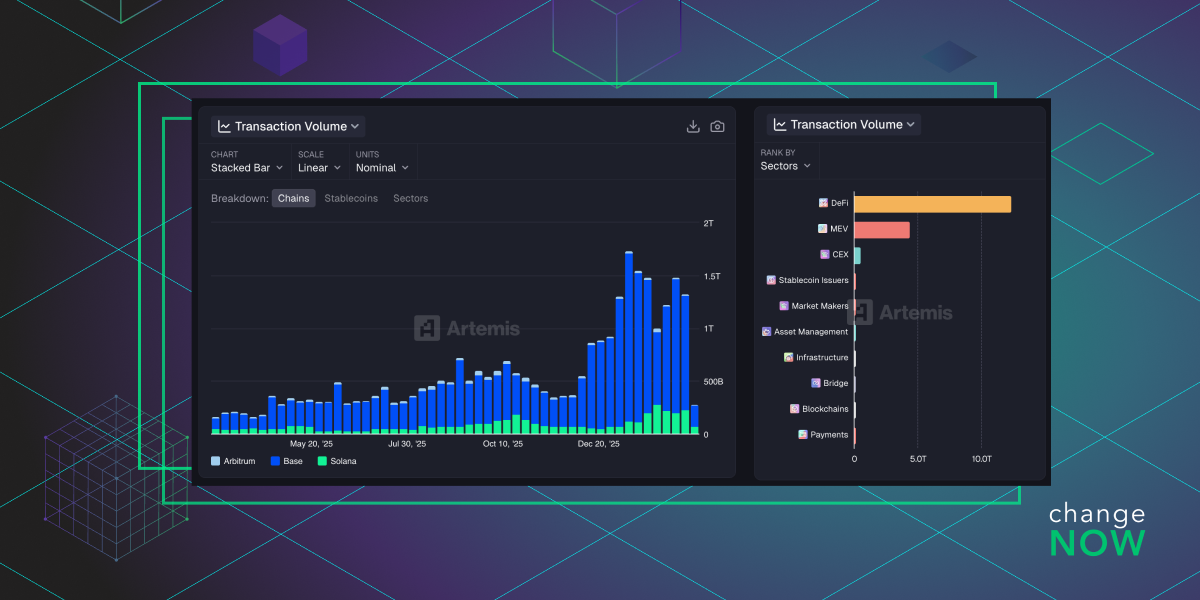
Layer-2 networks like Arbitrum, Base, and Optimism have been steadily closing the gap on fees and speed while inheriting Ethereum's security guarantees and developer base.
Base in particular has seen explosive growth in 2024-2025, attracting consumer apps and on-chain activity that might otherwise have landed on Solana.
The counterargument from Solana bulls is that L2s fragment liquidity and add complexity that a single high-performance L1 avoids. That's a fair point, but the data on whether users and developers care enough about that distinction is still being written.
Tokenomics: Inflation and insider allocations
Two tokenomics concerns come up consistently in skeptical analysis of SOL.
The first is inflation. While Solana's inflation schedule is declining toward a 1.5% floor, the current rate still means new SOL is being minted and distributed to validators regularly.
For holders who aren't staking, this is passive dilution - your share of the network shrinks over time unless you're earning staking rewards to keep pace.
The second is the initial supply allocation. A meaningful percentage of SOL's genesis supply was allocated to insiders - the founding team, Solana Labs, and early investors with vesting schedules that have been unwinding over time.
While much of this has already entered circulation, still sits in restricted categories.
Neither of these factors is a dealbreaker on its own. But combined, they represent a supply-side overhang that long-term investors should factor into their thinking, especially during bear markets when selling pressure from unlocks has historically amplified drawdowns.
Solana risk assessment
Every investment carries risk. The goal here isn't to scare you off or wave concerns away, but to name each risk clearly so you can decide how much weight it deserves in your thinking.
Technical risks
Solana's biggest technical question isn't about speed - it's whether it stays up.
Risk
Current Status
Network outages
Frequency has decreased, but not to zero
Validator hardware requirements
High barrier to entry, limits decentralization
Smart contract vulnerabilities
Present in any programmable blockchain
Client diversity
Improving with Firedancer client development
Technical reliability has improved meaningfully since 2021, but there are still issues to be solved.
Firedancer - a second validator client built by Jump Crypto. It's the most significant development here, as it reduces the risk of a single bug taking down the entire network.
Still a work in progress, but the right direction.
Market and liquidity risks
When sentiment turns, SOL tends to turn harder.
Risk
What It Means in Practice
High volatility
SOL has historically moved 2-3x harder than Bitcoin in both directions
Liquidity in bear markets
Bid/ask spreads widen, large exits become costly
Correlation with broader crypto
SOL rarely decouples: when Bitcoin falls, SOL typically falls harder
Memecoin dependency
A significant share of 2024 volume was memecoin-driven - fragile as a long-term thesis
It's a high-beta asset, historically moving 2-3x the magnitude of Bitcoin in both directions.
That's not a reason to avoid it. It just means your exit timing matters as much as your entry. The question you should be asking "What is the market doing when I need out?"
Regulatory risks
The regulatory picture has genuinely improved since 2022, but "still isn't fully resolved."
Risk
Status
SEC classification as a security
SOL has been named in past SEC filings - status unresolved in some jurisdictions
Staking regulation
Regulatory treatment of staking rewards varies by country
Exchange delistings
If regulatory pressure increases, exchange access could narrow
ETF approval uncertainty
Not guaranteed - a rejection would likely hit price short-term
SOL's classification as a security remains an open question in several jurisdictions, and staking rewards are treated differently depending on where you live. What's permissible in one country may be restricted in another.
Make sure to check your local regulatory framework before investing - this is one area where a quick conversation with a financial or tax professional is worth the time.
Tokenomics risks
For holders who aren't staking, Solana's inflation is a slow leak.
Risk
What to watch
Inflation dilution
Non-stakers lose ground to inflation passively
Insider unlock schedule
$870 million slated for unstaking, ~456,800 SOL remains locked within the FTX.
Validator sell pressure
Validators earn SOL rewards and may sell regularly
Concentrated early allocations
Foundation and team holdings remain significant
Staking largely offsets inflation for active participants. The bigger watch item is unlock schedules - historically, large unlock events have correlated with short-term selling pressure. Token Unlocks is the place to monitor this in real time.
None of these risks are reasons to automatically avoid SOL. They're reasons to go in with open eyes, which is exactly what the next section is about.
Before you invest: 4 questions to answer first
No article can tell you whether Solana is right for your portfolio. But these four questions can. Answer them honestly before you make any moves.
What's my time horizon?
SOL's history shows a clear pattern: short-term holders have repeatedly been caught in brutal drawdowns, while long-term holders who survived the volatility have generally been rewarded…
Well, provided they bought at reasonable valuations and didn't panic-sell at the bottom.
If your horizon is under 12 months, you're not investing in Solana's fundamentals - you're making a bet on short-term market sentiment. That's a different game with a different risk profile.
Ask yourself: If SOL dropped 60% tomorrow and stayed there for 18 months, would you hold or sell?
How much of my portfolio am I risking?
Position sizing is arguably more important than asset selection. A well-sized SOL position in a diversified portfolio behaves very differently from an all-in bet, even if the price moves identically.
A common framework among experienced crypto investors is to size high-volatility positions so that a complete loss would be painful but not catastrophic.
What that percentage looks like depends entirely on your overall financial situation.
Ask yourself: If this position went to zero, what would the actual impact be on my life?
Do I know how to store SOL safely?
Exchange hacks, wallet exploits, and lost seed phrases have cost crypto investors more money than bad trades. If you're holding a meaningful position, understanding your custody options isn't optional.
The basic spectrum:
Exchange custody - convenient, but you don't control the keys
Software wallet (Phantom, Now Wallet) - you control the keys, moderate security
Hardware wallet (Ledger, Trezor) - you control the keys, strongest security for long-term holders
Ask yourself: Do I know what a seed phrase is, where mine is stored, and what happens to my SOL if I lose access to it?
What's my plan If solana price drops 70%?
Not "would I be okay", but what would I actually do? Having a pre-decided plan before volatility hits is the difference between a strategy and a reaction.
Options to consider in advance:
Hold and wait out the cycle
Buy more at predetermined lower price levels (dollar-cost averaging down)
Set a hard stop-loss and accept the outcome
Take partial profits at predetermined upside targets before a drawdown happens
Ask yourself: Have I written down my exit strategy, both to the upside and the downside, before I put money in?
There are no right or wrong answers to these questions. But if any of them made you uncomfortable, that discomfort is worth sitting with before you invest.
Conclusion: Is Solana a Good Investment?
Solana is a credible investment thesis. It is not a safe one.
The network is real, the ecosystem is growing, and the technology does what it claims. Solana has survived a 97% drawdown, lost its most powerful backer, and came back with stronger fundamentals than it had before. That's not nothing.
At the same time, it's a high-beta asset in a volatile market, with unresolved questions around decentralization, regulatory classification, and whether its 2024 growth was structural or memecoin-driven. Those aren't dealbreakers, but they're not footnotes either.
The investors with the strongest case for holding SOL are those with a multi-year horizon, a position size they can hold through a 70% drawdown without panic, and a genuine belief that high-throughput blockchains will power the next wave of consumer applications.
If that describes you, Solana deserves a place in your research shortlist.
If it doesn't, there's no shame in that. The right investment is the one that matches your actual situation, not the one with the most compelling story.
Disclosure
This article is for informational purposes only and does not constitute financial advice. It was written by our editorial team, which operates independently from our trading desk.
All data is sourced from third-party platforms - we don't generate or adjust figures to support any particular view.
If you're willing to act on your research, SOL is always available to buy, sell, or swap on ChangeNOW.
What analysts broadly agree on is that SOL's 2030 value will be determined by sustained network usage, inflation trajectory, institutional adoption, and the broader regulatory environment.
The range of outcomes is genuinely wide.
Curious what the full range looks like: short-term, mid-term, and the obligatory 2030 moon targets?
Learn everything about Bitcoin Halving 2024: its impact on BTC price, historical trends, and altcoin reactions | Stay prepared for the next big move in crypto
Cardano vs Ethereum comparison covering fees, DeFi liquidity, staking and ecosystem size. This guide explains where each blockchain is used today and when ADA or ETH makes more sense.


 Source:
  Source:
  Source:
  Source:
  Source:
  Source:
  Source:
  Source:
  Source:
  Source: